
Protection Is Not Privilege: Choosing How We Hold Pain
An essay on trauma, recovery, and nervous system regulation, exploring protection vs. privilege and how intentional limits support sustainable care.
This reflection comes from a recent spoken word experience, one that left me feeling deeply grateful and unexpectedly tender afterward.
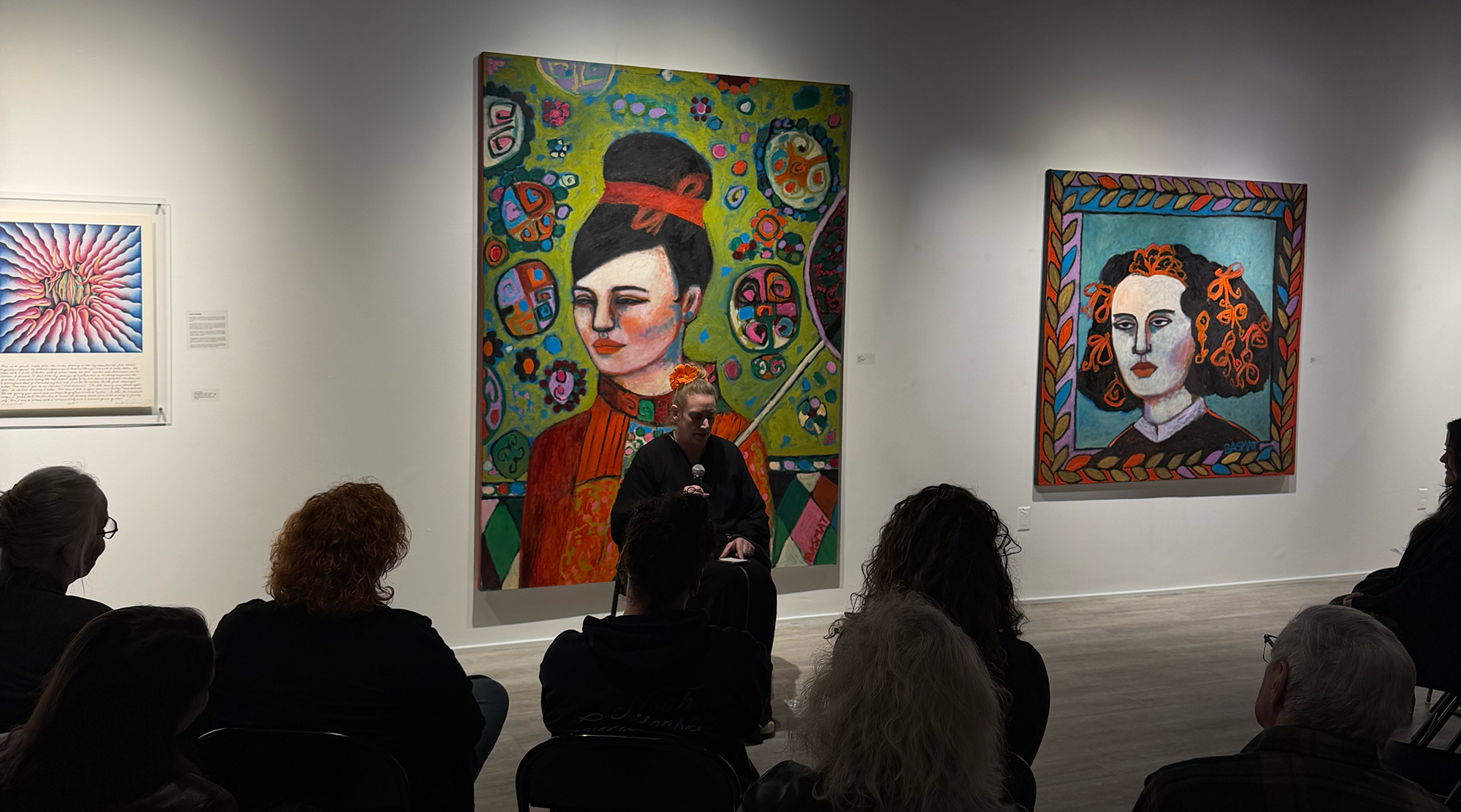
I spoke at a Let Her Speak event, surrounded by powerful work created by women artists, and I shared something deeply personal. What surfaced afterward wasn’t pride or relief. It was a familiar loop of intrusive thoughts…questions that tend to follow me when I take up space publicly.
This essay is about what happened next, and what I’ve learned about pain, protection, and how we choose to stay available to ourselves and others.
Intrusive Thoughts and Neurodivergence
I was invited to speak for five to eight minutes.
I spoke for eighteen.
As meaningful as the experience was, my brain latched onto that one detail. Going over time became the thing I couldn’t stop replaying. This is part of living with ADHD and rejection sensitivity…when perceived mistakes loop relentlessly and quietly steal joy.
I found myself asking:
Did I take up too much space?
Did I do it wrong?
No one came up to me afterward to criticize me. Instead, people shared how the words resonated, how they connected, how they felt seen. Still, the intrusive thoughts lingered.
Naming those thoughts matters. When I acknowledge them instead of arguing with them, they lose their grip. Eventually, they soften. And in that space, something more truthful can emerge.
“When intrusive thoughts are named, they lose their grip.”
Pain, Meaning, and Choice
The heart of what I shared that night was a question I’ve carried most of my life:
Why do we experience so much pain?
I’m a logical thinker. Meaning helps me survive. The framework that resonates most deeply for me is this: pain is not the goal…growth, understanding, and awakening are.
I’ve experienced significant loss. Both of my parents. Dear friends. Entire chapters of my life lived across countries and continents. I got sober overseas. I live in recovery now. Each experience taught me something essential; lessons that have saved my life and allowed me to show up for others in life-saving ways.
When I look back, I can see how meaning helped me keep going. How choice sometimes conscious, sometimes only visible in hindsight, shaped my capacity to live fully.
Regulation as Responsibility
There’s a common assumption that stepping back means disengaging.
For me, stepping back is how I stay available.
I can’t constantly watch the news. I can’t endlessly scroll social media. My nervous system doesn’t have an off switch. Images, stories, and suffering lodge themselves in my body and refuse to leave.
Limiting exposure allows me to get out of bed. It allows me to show up for my family, my work, and my community. I’m still informed. I’m still engaged. I’m simply intentional about how and where I hold pain.
Regulation isn’t avoidance. It’s responsibility. Especially for those of us shaped by trauma and deep empathy.
“Regulation isn’t avoidance. It’s responsibility.”
Resources and Collective Care
I never talk about challenges without sharing resources.
One of the most meaningful parts of my life and work is my involvement with the SHE RECOVERS Foundation , a free, strength-based organization supporting women, nonbinary, and trans individuals in or seeking recovery from trauma, mental health challenges, and addiction.
Collective care matters. And so do identity-based spaces…places where people can speak honestly about how their lived experiences shape their recovery and daily lives.
We need both. Broad community and specific belonging. Support that meets us where we are.
“I don’t hold pain everywhere - so I can hold it where it counts.
This is how I stay present. This is how I stay human.”